Chemotherapy Regimen & Cycle Management
Plan, schedule, and manage chemotherapy protocols with cycle-based treatment tracking and dose adjustments.

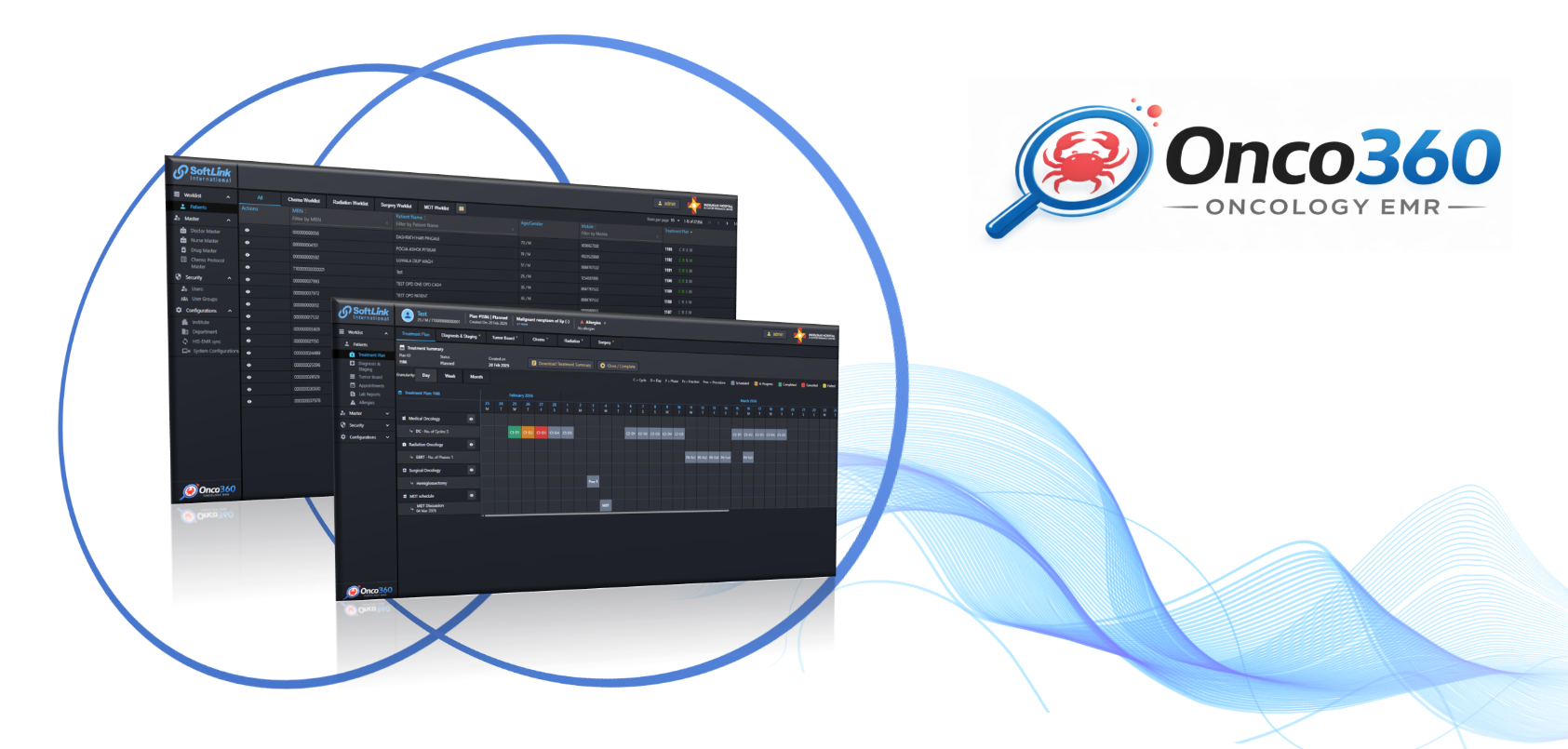
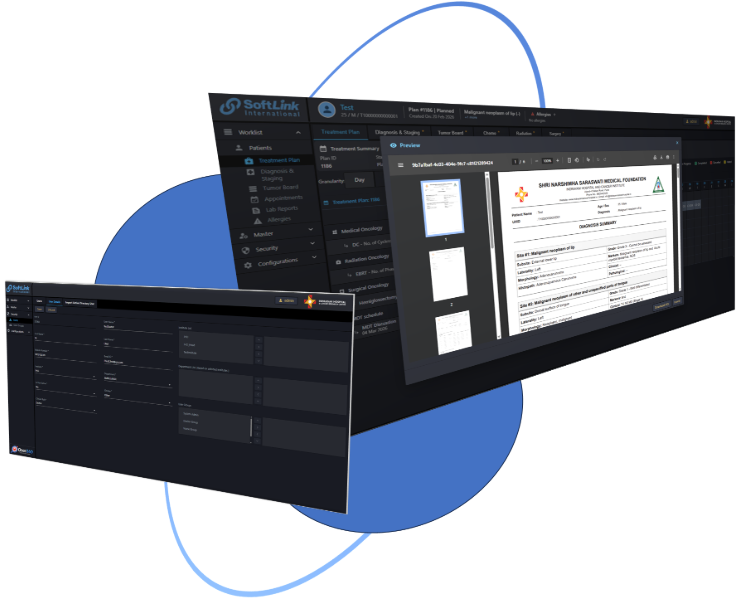
Enables standardized chemotherapy regimens with automated dose calculations based on patient parameters such as BSA, weight, and clinical condition.
Provides a comprehensive view of the patient’s cancer journey, tracking diagnosis, staging, treatments, and follow-ups over time.
Provides intelligent alerts and guideline based recommendations to support safe treatment planning and informed clinical decisions.
Captures treatment outcomes and adverse events while enabling automated reporting to cancer registries and quality programs.
Chemotherapy Regimen & Cycle Management
Plan, schedule, and manage chemotherapy protocols with cycle-based treatment tracking and dose adjustments.
Tumor Staging & Oncology Documentation
Capture structured oncology data including diagnosis, TNM staging, pathology, biomarkers, and treatment notes.
Improved Treatment Safety
Reduces medication errors with protocol-based chemotherapy planning and automated dose calculations.
Standardized Oncology Care
Ensures consistent treatment workflows aligned with clinical guidelines.
Better Care Coordination
Enables seamless collaboration between oncologists, nurses, labs, and radiology teams.
Enhanced Outcome Tracking
Supports monitoring of treatment response, complications, and long-term patient outcomes.
.
Our Onco 360 EMR seamlessly integrates with existing Hospital Information Systems (HIMS) and PACS using HL7-based interoperability standards, enabling automatic exchange of patient demographics, lab results, imaging data, and clinical documents. This ensures a unified patient record, eliminates duplicate data entry, and supports efficient, coordinated oncology care across departments.
The Onco 360 EMR can be deployed on-premise (in-house) within the hospital’s existing IT infrastructure or hosted on public or private cloud environments. This flexible deployment model allows healthcare organizations to choose the approach that best aligns with their IT policies, data security requirements, and scalability needs. Cloud deployment offers advantages such as easier scalability, remote access, and reduced infrastructure management, while on-premise deployment provides greater control over data and systems for institutions with strict compliance or internal IT governance requirements.